


Why Intelligent High Performers Fail at Fitness Despite Knowing Exactly What to Do
- Alex

- May 8
- 6 min read
Updated: May 13

You know what to do.
You know you should eat more protein. You know processed food isn't helping. You know that consistency matters more than intensity. You know that sleep is non-negotiable. You've read the books, listened to the podcasts, maybe even hired a coach once.
And yet - here you are. Not where you want to be physically.
Again.
This is one of the most common patterns I see in the people I work with: senior software engineers, founders, team leads, and high-performing parents who are exceptionally intelligent, deeply disciplined in their professional lives, and completely stuck when it comes to their own fitness.
The frustrating part? Their knowledge isn't the problem. Most of them know more about nutrition and training than the average gym-goer. The knowledge gap closed years ago.
So what's actually going on?
The Knowledge-Action Gap In Fitness Is Real - And It's Not About Willpower

The first thing most high performers assume when they fail at something is that they didn't try hard enough. That they need more discipline, more structure, more willpower.
This is wrong. And it's a dangerous assumption, because it leads to the same approach producing the same result - just with more guilt attached.
The gap between knowing and doing is not a knowledge problem. It's not a willpower problem. It's a design problem.
The environment hasn't been set up to make the right behavior the default. The system around fitness hasn't been built the way a high performer builds systems around everything else that matters to them.
Think about how a senior engineer approaches a complex technical problem. They don't rely on motivation to write good code. They create architecture, automated checks, processes that make quality the path of least resistance. They remove friction from the right behaviors and add friction to the wrong ones.
They don't do this for their fitness. Instead, they rely on motivation - which is finite, unreliable, and always loses to exhaustion and a full calendar.
Why Intelligence Sometimes Works Against You
Here's the uncomfortable truth: being highly intelligent can actually make fitness harder.
Smart people are exceptionally good at generating reasons. When a less analytical person misses a workout, they feel vaguely bad and move on. When a high performer misses a workout, they construct a fully coherent, internally consistent argument for why it was actually the right decision.
The meeting ran long. The project is at a critical stage. Sleep was poor and training on poor sleep increases injury risk. Recovery is part of training. There's always next week.
Every one of these statements contains some truth. That's what makes them so effective at killing progress. The intelligent mind is very good at finding the truth inside a rationalization.
This isn't a character flaw. It's a feature of analytical intelligence applied to the wrong problem.
The solution isn't to become less intelligent. It's to remove the decision entirely. When the workout is non-negotiable - same time, same days, no exceptions short of illness or genuine emergency - the analytical mind doesn't get to weigh in. The behavior happens before the reasoning starts.
The Identity Problem Nobody Talks About

There's a deeper issue that rarely gets named.
Most high performers have a very clear identity around their professional capabilities.
They know who they are at work.
They've built that identity over years of evidence - promotions, products shipped, problems solved, teams led.
They do not have a clear identity around being someone who is physically capable and fit.
And identity drives behavior more than knowledge ever will.
If you don't see yourself as an athlete - or at least as someone who trains consistently - then every missed workout is just confirming what you already believe about yourself. Every restart feels like starting from scratch because there's no underlying identity to return to.
The people who maintain fitness long-term don't think of it as something they do.
They think of it as something they are.
The workout isn't a task on a list - it's an expression of who they are.
Building that identity takes time and repetition.
It can't be hacked or shortcut.
But it starts with one decision: to act like that person before you feel like that person.
Show up when you don't want to. Not because you're motivated - but because that's what someone who trains consistently does.
The Perfectionism Trap
High performers have high standards.
This is a professional asset and a fitness liability.
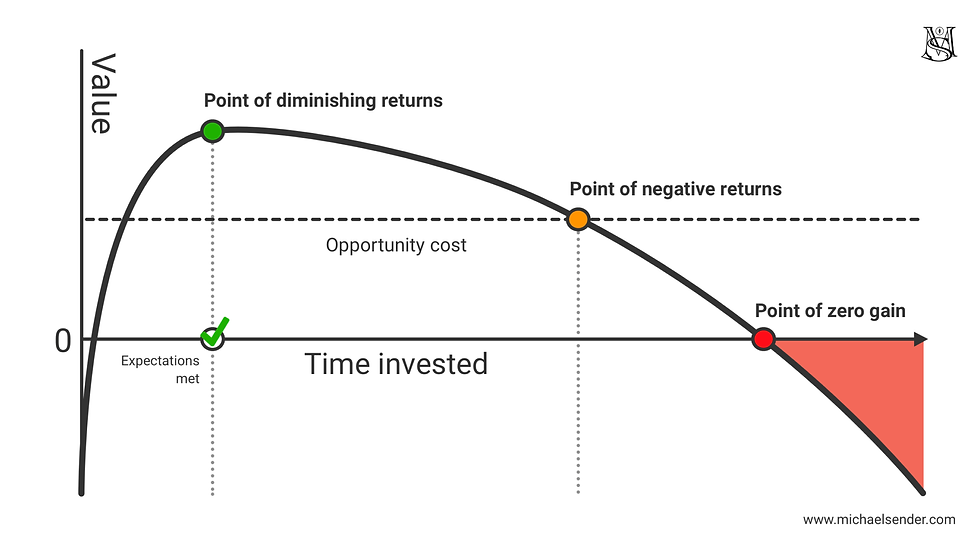
The perfectionism that drives a team lead to review every detail of a product launch is the same perfectionism that makes them abandon a training program because they missed two sessions.
The gap between their ideal and their reality feels like failure - and high performers are very uncomfortable with failure.
So they do something counterintuitive: they stop entirely rather than continue imperfectly.
Better to not be doing it than to be doing it badly.
This logic works in some professional contexts. It is catastrophic for fitness.
Fitness is one of the few domains where an imperfect, inconsistent, mediocre effort maintained over years will produce dramatically better outcomes than a perfect effort maintained for eight weeks. The person who trains at 60% effort, twice a week, for two years will outperform the person who trains at 100% effort, five times a week, for three months - every single time.
The goal is not excellence in any individual session. The goal is to never fully stop.
A bad workout counts. A short workout counts. A workout where you're tired and distracted and only go through the motions - it counts. It keeps the habit alive. It keeps the identity intact. It keeps the streak unbroken.
Done is infinitely better than perfect.
The Cognitive Load Problem
This one is specific to people in high-cognitive-demand roles - and it's underappreciated.
A senior software engineer who has spent eight hours in deep focus, solving complex architectural problems, making dozens of micro-decisions, has a depleted prefrontal cortex by the time the workday ends. Decision fatigue is real and well-documented.
Fitness decisions - what to eat, whether to train, which exercise to do, how long to rest - are exactly the kind of decisions that suffer most under cognitive depletion.
The answer is to remove as many fitness decisions as possible. Same training days every week. The same few meals on rotation. Automatic grocery defaults. A program you follow without thinking, not one you modify based on how you feel that day.
The less you have to decide about fitness, the more likely you are to do it.
This is why the most sustainable fitness protocols for high-cognitive-demand professionals are often the simplest ones - not because simple is optimal, but because simple is executable under real-life conditions.
What Actually Works
After working with software engineers, founders, team leads, and high-performing parents, the pattern that produces lasting results looks like this:
Minimum viable consistency over maximum effort. Two sessions per week, every week, non-negotiable. Short enough that there's no excuse not to do them. Frequent enough to build real momentum.
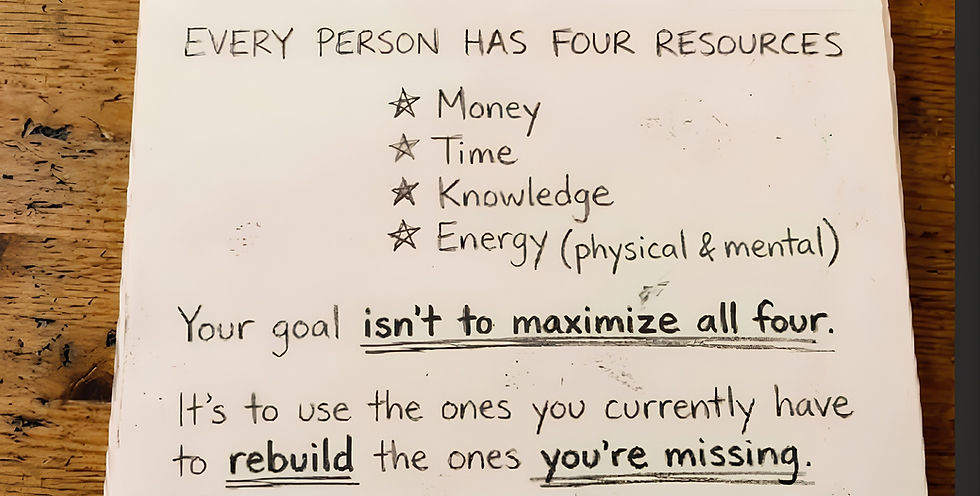
Environment design over willpower. Gym bag packed the night before. Workout clothes laid out. Training time blocked in the calendar like a client meeting. Healthy defaults in the kitchen that don't require decisions.
Identity before results. Start calling yourself someone who trains - not because you've earned it, but because you're building toward it. Act like that person before you feel like that person.
Imperfect consistency over perfect inconsistency. Miss a session? Fine. Miss two? Fine. Miss three weeks? Still fine - come back. The only failure is the permanent stop.
One number to track. Not weight, not body fat percentage, not VO2 max. Just the number of weeks in a row you trained at least twice. That's the metric that predicts everything else.
The Real Reason This Matters
Intelligent high performers fail at fitness not because they're weak or undisciplined. They fail because they apply the wrong mental models to a domain that doesn't respond to intelligence and effort the way their professional lives do.
Fitness rewards patience, consistency, and identity more than knowledge, intensity, and optimization.
Once you stop trying to be smart about fitness and start trying to be consistent about fitness - everything changes.
You already know what to do.
Now it's about building the system that makes doing it inevitable.
I work 1:1 online with senior software engineers, entrepreneurs, team leads, and high-performing parents who are done with the restart cycle. If you've been here before and want a different outcome, book a free 30-minute call and let's build something that actually sticks.



Comments