


Fitness Coach for Software Engineers: What That Actually Means and How It Works
- Alex

- Jun 25
- 6 min read
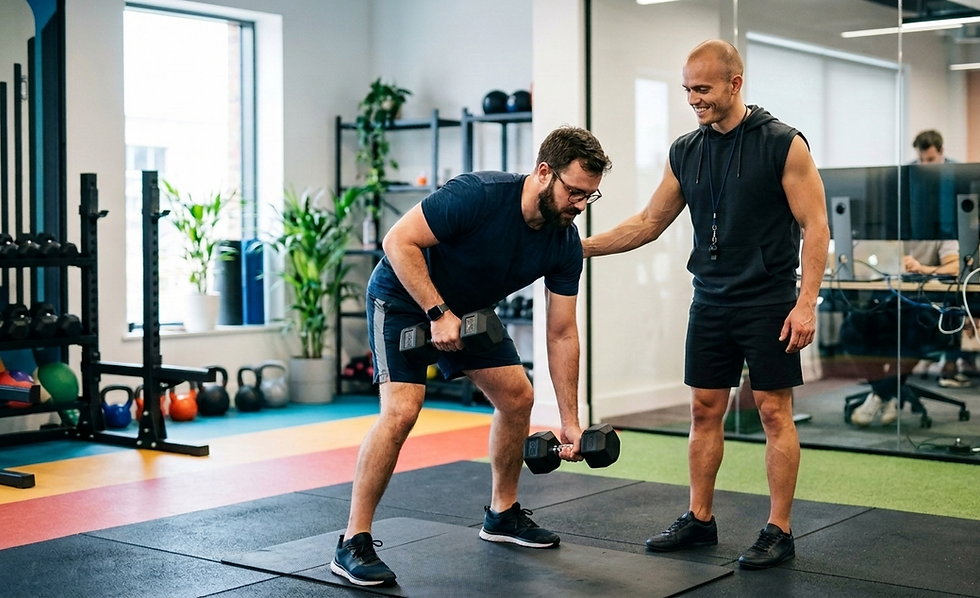
"Fitness coach for software engineers" sounds like a niche so specific it shouldn't need explaining.
It does, because most people searching that phrase have a generic personal trainer in mind and don't realize how different the actual service needs to be.
A general fitness coach optimizes for hours in the gym and willpower outside it. A coach built for software engineers optimizes for the opposite - minimal time, maximum cognitive load, irregular schedules, and a body that's been sedentary for ten hours before training even starts.
I built my coaching practice around that distinction specifically, after years of training people with normal jobs and normal schedules, and noticing that none of it transferred cleanly to people who think for a living instead of moving for a living.
Here's what that actually means in practice - not as a sales pitch, but as an honest breakdown of what's different and why it matters.
Why "personal trainer" and "fitness coach for software engineers" aren't the same service
A personal trainer, in the traditional sense, builds a program assuming a relatively stable baseline - consistent sleep, manageable stress, energy available for training regardless of what happened at work that day. This assumption holds for a lot of people. It doesn't hold for software engineers.
The baseline for a software engineer includes chronic sedentary posture, cognitive fatigue that doesn't respond to caffeine the way physical fatigue does, irregular sleep driven by late commits and unresolved problems running in the background at 11pm, and decision fatigue severe enough that "what should I eat" becomes a genuinely hard question by 6pm.
A program built without accounting for this fails in a specific, predictable way. It works for two to three weeks - the engineer is motivated, follows the plan, sees the gym sessions as another task to execute. Then a demanding sprint arrives, sleep gets disrupted, the program collapses, and the conclusion drawn is "I don't have the discipline for this." The actual problem was that the program assumed a baseline that never existed.
I coach differently because of this. The training volume, the nutrition approach, and the recovery protocol are all built assuming irregular stress, not despite it.
What the coaching actually looks like
The model is one structured monthly call plus ongoing async support through Trainerize, rather than multiple weekly sessions. This isn't a budget version of more intensive coaching - it's a deliberate structure built around the constraint that matters most for this population: time and the cognitive bandwidth to manage anything complicated.
A monthly call is enough to review what worked, adjust the program based on the month's actual stress load, and address whatever specific problem has come up - sleep, a stalled lift, posture pain, an upcoming work trip. The async support in between handles the smaller questions and accountability without requiring scheduled time.
The training programs are built around two to three sessions per week, 30-45 minutes each, prioritizing compound movements and progressive overload over the high-volume, high-variety approach that works for people with more recovery capacity available. Most of the engineers I work with don't need more training. They need training that fits inside a life that's already full and that they'll actually do consistently for years, not weeks.
Nutrition coaching avoids calorie counting almost entirely. Not because counting doesn't work, but because adding another tracking system on top of an already cognitively demanding job produces compliance for two weeks and abandonment after that. Instead, the approach is protein anchoring, photo-based awareness, and identifying the two or three specific patterns - usually weekend collapse, evening snacking, or inadequate breakfast protein - that are actually driving the problem.
The kind of person this works for
This isn't a fit for everyone, and being honest about that matters more than making it sound universally applicable.
It works well for someone who is already executing reasonably well in their career and wants the same systemized approach applied to their body - someone who responds to a clear plan and follows through once the plan accounts for their actual constraints. Dmitry, a senior software engineer in Berlin, lost 11.7kg over several months with exactly this approach - two structured changes, photo-based nutrition awareness, and a program that fit around a demanding job and a young family.
It works less well for someone whose life is in genuine crisis - severe sleep deprivation from a newborn, acute mental health struggles, multiple major life disruptions happening simultaneously. In those cases, fitness coaching can provide some structure and support, but it isn't the primary intervention that situation calls for, and I say that directly rather than overselling what coaching can realistically achieve under those conditions.
The honest pattern across the clients I've worked with is that results correlate most strongly with whether someone is ready to execute consistently, not with how motivated they sound on the first call. Readiness shows up as someone who does what's agreed on between calls without needing to be convinced each time - not perfectly, but consistently enough that small adjustments compound into real change.
Why the niche matters more than it sounds like it should
A fitness coach who works with everyone develops generic instincts. A fitness coach who works specifically with software engineers develops pattern recognition for this population's specific failure modes - the 3pm energy crash, the weekend nutrition collapse, the hip flexor tightness from years of sitting, the difficulty switching off after work that quietly sabotages sleep and recovery.
These patterns repeat across nearly every engineer I work with, with small variations. Recognizing them immediately - rather than discovering them through trial and error over months - is the actual value of working with someone who specializes in this population rather than someone who happens to also train software engineers among a broader client base.
What working together actually involves
If this resonates with where you are - executing well professionally, wanting the same approach applied to training and nutrition, but tired of generic programs that don't survive contact with a demanding job - the process starts with a conversation, not a sales pitch.
A 30-minute call covers your current situation, what's gotten in the way before, and whether the approach described here actually fits what you need. If it does, we build a program around your actual schedule and constraints, not an idealized version of your week that doesn't exist.
You can see the testimonials and results from engineers and tech professionals I've worked with - including the specifics on what changed and how long it took - on the main page.
If you're a software engineer or tech professional and any of this sounds like your situation, book a free 30-minute call and let's talk about whether this is the right fit.

Frequently Asked Questions
What makes a fitness coach for software engineers different from a regular personal trainer?
A regular personal trainer assumes a relatively stable baseline of energy, sleep, and recovery capacity. A coach built for software engineers accounts for chronic sedentary posture, irregular sleep from late work, cognitive fatigue that affects decision-making around food and training, and a body that's been static for hours before training begins. The program structure, training volume, and nutrition approach are all built around these specific constraints rather than a generic assumption of consistent availability and energy.
How much time does coaching for software engineers actually require?
The model is built around two to three training sessions per week at 30-45 minutes each, plus one structured monthly call and ongoing async support through a coaching app. This is deliberately minimal because the constraint that matters most for this population is time and cognitive bandwidth, not motivation.
Does this kind of coaching involve calorie counting?
Generally no. Calorie counting adds another tracking system on top of an already demanding cognitive load, which produces short-term compliance and long-term abandonment for most people in this population. The approach instead uses protein anchoring and photo-based awareness to identify the two or three specific patterns actually driving the problem.
Who is this type of coaching not a good fit for?
Someone in genuine crisis - severe sleep deprivation, acute mental health struggles, or multiple major life disruptions happening at once - needs a different primary intervention than fitness coaching, even though some structure can still help. The approach works best for someone already executing reasonably well professionally who wants the same systemized consistency applied to their body.
What results have other software engineers gotten from this approach?
Results vary, but the most documented example is a senior software engineer in Berlin who lost 11.7kg over several months using photo-based nutrition awareness and a training program built around a demanding job and a young family - without calorie counting or a gym membership. Full testimonials and additional results are available on the main site.
How do I know if I'm ready for this kind of coaching?
Readiness shows up less in how motivated someone sounds on a first call and more in whether they consistently follow through on what's agreed between sessions. If you've tried generic programs that worked for a few weeks before collapsing under a demanding work period, that's usually a sign the program was the problem, not your discipline.


Comments