


Why Software Engineers Can't Sleep (And What Actually Fixes It)
- Alex

- May 12
- 8 min read
Updated: May 13

You're tired. You know you need sleep. You get into bed at a reasonable hour.
And then you lie there.
Brain running.
Replaying the architecture decision from this afternoon.
Thinking about the PR review you forgot to merge.
Planning tomorrow's standup.
Wondering if the production issue from last week is actually fixed or just quiet.
An hour passes. Maybe two.
You finally fall asleep - only to wake at 3am with a racing mind and no obvious reason.
Sound familiar?
This is not insomnia. It's not anxiety in the clinical sense. It's the predictable output of a brain that has been running at high intensity for 10-12 hours and hasn't been given a proper signal to switch off.
Software engineers, developers, tech leads, and founders are among the worst sleepers of any professional group. Not because of personal failure. Because of a specific set of conditions that the job creates - and that nobody explains clearly.
This post explains those conditions and what actually fixes them.
The Real Reason Your Brain Won't Switch Off
The standard advice for poor sleep is to avoid screens before bed, drink less coffee, and have a consistent bedtime.
All of that is true. None of it addresses the root cause for tech professionals.
Here's what's actually happening:
Deep focus work - the kind required for complex coding, system design, debugging, and architectural decisions - activates the prefrontal cortex for extended periods and generates significant cognitive arousal. This is not just mental fatigue. It's a physiological state. Cortisol and norepinephrine remain elevated. The nervous system stays in a low-level alert mode even after the laptop closes.
Your body doesn't know that the threat was a deployment deadline rather than a predator. It responds to cognitive stress the same way it responds to physical danger - by keeping you alert, prepared, ready to respond.
This is why you can finish work at 7pm, spend three hours doing "relaxing" things, and still lie in bed with a brain that won't stop.
The wind-down hasn't happened. The nervous system is still online.
The Circadian Problem Specific to Software Engineer's Sleep
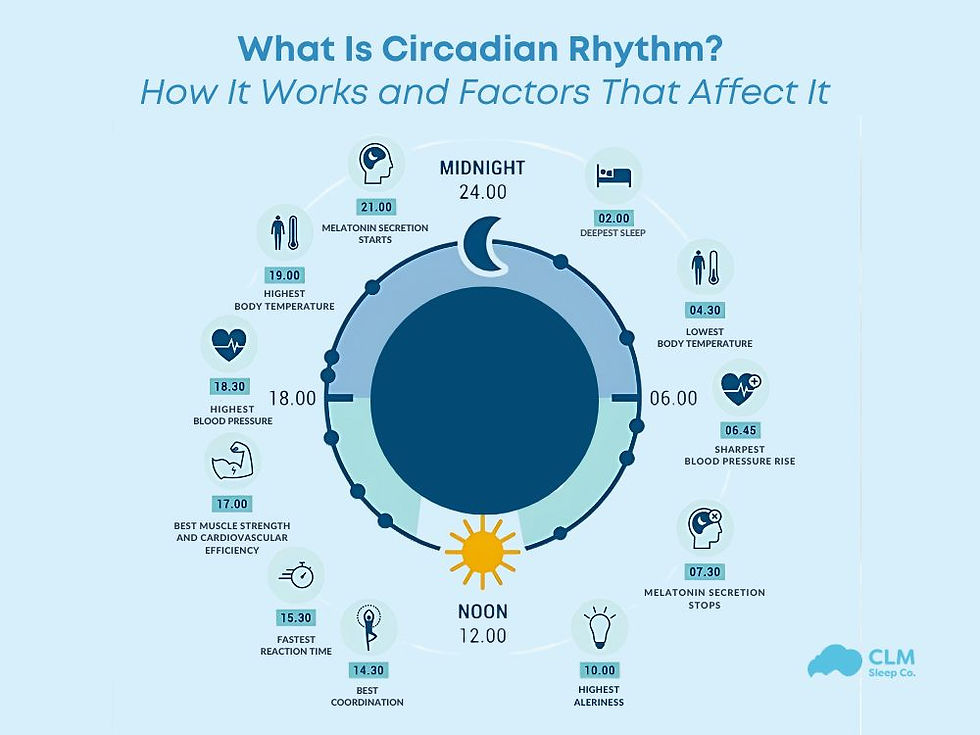
Your body has a clock. It regulates when you feel alert, when you feel sleepy, when your body temperature rises and falls, and when hormones like cortisol and melatonin peak and drop.
This clock runs on signals - light, movement, meal timing, temperature, and social cues. When those signals are consistent, the clock runs well. When they're disrupted, sleep suffers.
Tech work disrupts almost every one of these signals simultaneously.
Light: You spend the brightest hours of the day indoors, under artificial light. Then in the evening - when your body needs to start winding down - you're staring at a screen emitting blue light, which suppresses melatonin and tells your brain it's still midday.
Movement: Your body uses physical activity as one of its primary signals that the day is winding down. A software engineer who sits for 12 hours and then goes directly to bed is sending no movement signal at all. The body has no sense of a day arc - just a long, undifferentiated period of wakefulness followed by an abrupt attempt at sleep.
Meal timing: Many tech professionals skip meals during deep focus sessions and eat large meals late in the evening. Late eating raises body temperature and keeps digestion active - both of which interfere with the drop in core temperature that sleep requires.
Cortisol timing: Cortisol is supposed to peak in the morning and decline through the day. Chronic work stress, deadline pressure, and evening screen time can keep cortisol elevated into the night - making it physiologically difficult to fall asleep regardless of how tired you feel.
What I Learned From Night Shifts
I worked night shifts as a security guard during my student years - often sleeping across two chairs between shifts, then heading to lectures. Later, I worked nights at Charite, Europe's largest university hospital, as an X-ray technician.
I learned early that the body can adapt to almost anything - but it always extracts a cost.
What years of disrupted sleep taught me is that the conventional advice misses the most important variable: regularity beats duration.
Going to bed and waking at consistent times - even if sleep is shorter than ideal - produces better cognitive function than chasing eight hours on an irregular schedule. The body craves rhythm. When it gets rhythm, it compensates. When it doesn't, it compounds the deficit.
I currently average 6 to 6.5 hours of sleep. My daughter was born in 2024 and I'm figuring it out all over again - with a WHOOP on my wrist and a pragmatic acceptance that some nights are just going to be difficult.
What I don't do is let one bad night spiral into a disordered week.
The 7 Sleep Disruptors Most Tech Professionals Ignore
1. High cortisol in the evening
This is the primary driver for most software engineers. The fix is not relaxation in the generic sense - it's specific signals that tell the nervous system the day is over.
Laying out tomorrow's clothes. Writing a to-do list for the next day. Box breathing (4 seconds in, 4 hold, 4 out, 4 hold). A consistent wind-down ritual that repeats every night. These aren't wellness clichés - they're cortisol management tools.
2. Caffeine timing
Caffeine has a half-life of 5-7 hours. A coffee at 3pm still has half its effect at 9pm. This is why a late afternoon coffee disrupts sleep even when you don't feel stimulated by it.
Cut caffeine before 2pm. If you need something in the afternoon, go for a walk instead. The alertness from movement costs nothing the next night.
3. Screen time before bed
Blue light from screens suppresses melatonin - the hormone that signals your body to sleep. Even 30-60 minutes of screen exposure before bed delays your natural wind-down.
The simple fix: phone away one hour before bed. Not in the room. Read a book - a real one, or an e-reader without backlight. The difference is immediate and measurable.
4. Room temperature
Your core body temperature needs to drop slightly to initiate and maintain sleep. Most people sleep in rooms that are too warm.
The optimal range is 15-19°C. If you're waking in the night or sleeping lightly, temperature is often the overlooked variable.
5. Alcohol
This is the one that surprises most tech professionals who use a drink or two to decompress after a difficult day.
Alcohol helps you fall asleep faster. It destroys sleep quality after that. Even 2 drinks reduce deep sleep, fragment REM cycles, and keep the liver active throughout the night. You wake up tired even after 8 hours because the restorative phases were cut short.
One beer (500ml, 5%) takes roughly 2.5 hours to metabolize. Two beers and a glass of wine - a typical evening for many professionals - takes 6+ hours. Your entire night is affected.
My personal solution: alcohol-free beer. It sounds small. The effect is significant. You get the ritual of unwinding with a drink, the taste, the social element - without the cortisol spike, the sleep disruption, or the groggy morning.
6. Late dinner
Eating within 2 hours of bed raises body temperature and keeps digestion active. Both interfere with the drop in core temperature that sleep requires.
If you're hungry close to bed, a small protein snack is better than a large meal. Experiment and track the result.
7. Sugar in the evening
High-sugar snacks late at night spike blood sugar, followed by a crash that can cause night wakings. Stable blood sugar through the evening - achieved through protein-anchored meals and avoiding high-sugar snacks after dinner - is one of the most underrated sleep improvements available.
How to Train Around Poor Sleep
This section is specific to tech professionals who train - and who want to know how to handle training when sleep has been disrupted.
The answer most coaches give is vague. Here's the specific framework I use with clients:
Good recovery day (WHOOP green, or subjectively feeling rested): Train as planned. Full session, progressive overload, push the intensity.
Poor recovery day (WHOOP red or yellow, or noticeably fatigued): Reduce intensity. Keep the session short - 20-25 minutes. Focus on movement quality rather than load. The goal is to keep the habit alive and support recovery, not create additional strain on a system that's already depleted.
After a rough night: Protein-rich breakfast. Generous hydration. A walk before screens. Light strength training if training is scheduled - drop the weight, focus on control. A 20-30 minute nap if possible. These simple moves restore enough function to make the day productive without accelerating the deficit.
The mistake most high performers make is either training at full intensity regardless of recovery state, or skipping entirely out of guilt. Neither is optimal. The recovery-adjusted session is the answer.
What Actually Works: The Sleep Toolkit
Over years of night shifts, disrupted sleep, new parenthood, and coaching tech professionals through the same patterns, these are the tools that consistently produce results:
WHOOP or similar recovery tracker. Not because you need data to tell you you're tired - but because it reveals patterns you'd otherwise miss. Two drinks affecting your HRV. A late meal shifting your recovery score. Data makes the abstract concrete.
Magnesium glycinate. One of the most effective supplements for sleep quality, particularly for people who train. Supports nervous system relaxation and muscle recovery. Cycle it - use during high-stress or high-training phases, take breaks.
Blackout curtains. Non-negotiable if you live somewhere with significant light pollution or long summer days. Less ambient light means more melatonin, deeper sleep, and longer nights.
A consistent wind-down ritual. Not the same as a bedtime routine. A ritual is a sequence of actions that signal to the nervous system that the day is ending. It can be 20 minutes. It needs to be consistent and repeated nightly until it becomes automatic.
Sleep regularity. Same bedtime, same wake time, every day - including weekends. The body does not distinguish between weekdays and weekends. Sleeping in on Saturday disrupts Monday's sleep more than most people realize.
The Compounding Cost of Getting This Wrong
One bad night costs you processing speed, reaction time, decision quality, and emotional regulation - all measurable, all relevant to your work.
Chronic poor sleep - the kind that accumulates over months and years of treating sleep as a variable rather than a constant - costs significantly more. Metabolic function. Immune resilience. Cardiovascular health. Mental health.
The software engineers I work with who fix their sleep report improvements in every other area almost immediately. Better focus during deep work. Lower afternoon energy crashes. More patience. Better body composition results from the same training and nutrition. Less reliance on caffeine to function.
Sleep is not a productivity hack. It's the foundation everything else sits on.
Go Deeper: The Sleep Playbook for Tech Pros
I wrote a free guide specifically for tech industry professionals - covering circadian rhythm optimization, the 7 major sleep disruptors, my personal toolkit, how to bounce back after bad nights, and how to use recovery data to train smarter.
It's free. It's practical. And it's built for people with demanding careers, not people with unlimited time to optimize their wellness routines.

I work 1:1 online with software engineers, tech leads, entrepreneurs, and high-performing professionals who want to build fitness and recovery systems that fit their actual life. If sleep is part of what's holding you back - book a free 30-minute call and let's talk about what's actually going on.



Comments